I've been reading a lot recently. Here are a few of my recent reads.
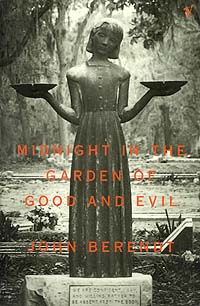
Midnight in the Garden of Good and Evil by John Berendt
I read this book after watching the movie. I liked it a lot! It was an easy read, and it was pretty much identical to the movie, so I don't have a lot to add.
Inamorata by Megan Chance
I read this as one of the Kindle First free books. This book was following in the vein of recent young adult fiction. The characters weren't very well developed and the story took a while to get into. It also was kind of weird - there were some vampire-like fantasy elements, and strange relationships between a woman and her brother. Once I got into the exciting part, about 2/3 of the way through, I couldn't put it down, but it wasn't very well written nonetheless.
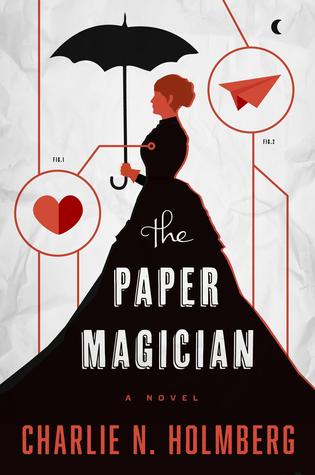
The Paper Magician by Charlie N. Holmberg
This was yet another book from the Kindle First collection. I really enjoyed this book! It was fairly well written for a young adult novel, and the story was very whimsical and imaginative. I really enjoyed this, and if there is a sequel I will definitely put it on my reading list!
The Bling Ring by Nancy Jo Sales
I really didn't like this book. I feel like everything in it could have been easily condensed into a long-form article, and there was no need for the book format. It repeated a lot of information throughout and had spoilers, and additionally, didn't present the story chronologically, or seemingly with any thought for how to best lay it out. But a good gossipy beach read I guess...
Showing posts with label reading. Show all posts
Tuesday, October 28, 2014
Friday, October 17, 2014
What I'm Reading - September 2014
I've been reading a lot recently! Here is the next installment of what has been on my Kindle these past few months.
American Gods by Neil Gaiman
I actually read this book a really long time ago and didn't take the time to write about it here, so I've probably forgotten some things about it. I remember liking this book overall - it's kind of a fantastical look at the modern world. There were some twists that I didn't see coming, and by the climax of the story I was definitely sucked in, but the beginning was a bit slow going for me. Recommended, but probably a bit long for some people.
The Fracking King by James Browning
I got this book as part of the Kindle preview program, where Kindle users get a free download of one of four books each month. It was a very easy read, but not very well written, and not the world's most engaging story. The characters weren't very deep, but I would say this is good beach reading - light and easy but not super deep. The whole premise of the book as well was a bit strange, and not necessarily very realistic.
The Barkeep by William Lashner
This was another book I got from Kindle First. Like the one discussed above, it was very light reading - not super compelling, but also interesting enough that I read the whole thing. It was an easy read, and I got through it very quickly. Recommended for beach reading (not till next year, I guess) or reading while drinking. Interestingly, each chapter is named after a different cocktail. It would be fun to play a drinking game with this one, and it goes by so quickly that it would be easy to get really wasted while reading.
The Three Musketeers by Alexandre Dumas
I read this in translation from the original French, obviously, but I got it for free since it is in the public domain, and I'm not sure of the translator. This book has a plot that is generally exciting, especially since I had never seen the movie and generally didn't know what it was about. However, in my opinion, it was far too long, and I got really bored about 1/3 of the way through and stopped reading it for a few months. When I came back to it, I read another third before getting upset about one plot point - at one point, the story's hero rapes a girl, and it is presented as really no big deal, whatever, hahaha. This bothered me a lot, and so I took another break from reading it. In the end, I just finished it so I could be done with it. But it is a good story, so I would perhaps recommend watching the movie or something like that, so you can get the benefit of the story without the long-windedness or the nonchalant rape.
American Gods by Neil Gaiman
I actually read this book a really long time ago and didn't take the time to write about it here, so I've probably forgotten some things about it. I remember liking this book overall - it's kind of a fantastical look at the modern world. There were some twists that I didn't see coming, and by the climax of the story I was definitely sucked in, but the beginning was a bit slow going for me. Recommended, but probably a bit long for some people.
The Fracking King by James Browning
I got this book as part of the Kindle preview program, where Kindle users get a free download of one of four books each month. It was a very easy read, but not very well written, and not the world's most engaging story. The characters weren't very deep, but I would say this is good beach reading - light and easy but not super deep. The whole premise of the book as well was a bit strange, and not necessarily very realistic.
The Barkeep by William Lashner
This was another book I got from Kindle First. Like the one discussed above, it was very light reading - not super compelling, but also interesting enough that I read the whole thing. It was an easy read, and I got through it very quickly. Recommended for beach reading (not till next year, I guess) or reading while drinking. Interestingly, each chapter is named after a different cocktail. It would be fun to play a drinking game with this one, and it goes by so quickly that it would be easy to get really wasted while reading.
The Three Musketeers by Alexandre Dumas
I read this in translation from the original French, obviously, but I got it for free since it is in the public domain, and I'm not sure of the translator. This book has a plot that is generally exciting, especially since I had never seen the movie and generally didn't know what it was about. However, in my opinion, it was far too long, and I got really bored about 1/3 of the way through and stopped reading it for a few months. When I came back to it, I read another third before getting upset about one plot point - at one point, the story's hero rapes a girl, and it is presented as really no big deal, whatever, hahaha. This bothered me a lot, and so I took another break from reading it. In the end, I just finished it so I could be done with it. But it is a good story, so I would perhaps recommend watching the movie or something like that, so you can get the benefit of the story without the long-windedness or the nonchalant rape.
Monday, October 13, 2014
What I'm Reading - Summer 2014
So it has been a long time since I wrote about what I'm reading! Thanks to the Kindle I got for Christmas, I've returned to my voracious reading habits from high school. I'd like to review some of the books I've read recently.
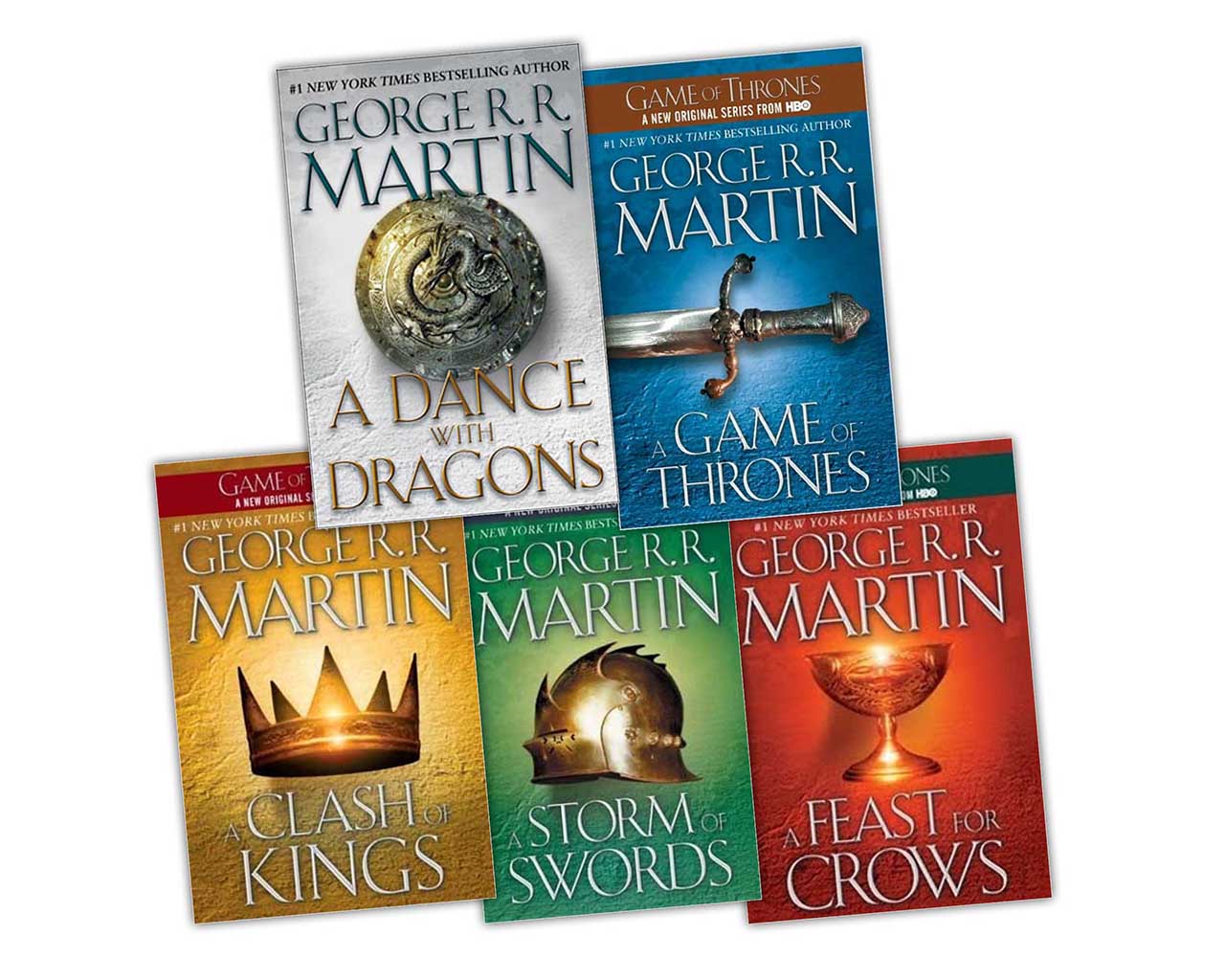
The first thing I did after getting my Kindle was download all of the books the series Game of Thrones was modeled after.
I watched all of the Game of Thrones episodes that had come out by the time I was reading the books (through season 3). The first two books were what had already been covered in the television series, so it wasn't too much new plot. However, I was surprised that I didn't feel bored by it even though I already knew what was about to happen. It was even more exciting when I got to the new plot materials in the later books. I have read other fantasy series in the past such as the Lord of the Rings trilogy, but the Game of Thrones books were much easier to read. There are a lot of characters in these books, which has gotten criticism from some of my friends who have read the books and found it confusing. However, since I watched the show first, I was able to keep all the characters straight since I could put a face with all the names. I highly recommend these books to anyone who likes the show, or anyone who likes fantasy novels.
I'll be back soon with review of some of the other books I've been reading these past few months!
The first thing I did after getting my Kindle was download all of the books the series Game of Thrones was modeled after.
I watched all of the Game of Thrones episodes that had come out by the time I was reading the books (through season 3). The first two books were what had already been covered in the television series, so it wasn't too much new plot. However, I was surprised that I didn't feel bored by it even though I already knew what was about to happen. It was even more exciting when I got to the new plot materials in the later books. I have read other fantasy series in the past such as the Lord of the Rings trilogy, but the Game of Thrones books were much easier to read. There are a lot of characters in these books, which has gotten criticism from some of my friends who have read the books and found it confusing. However, since I watched the show first, I was able to keep all the characters straight since I could put a face with all the names. I highly recommend these books to anyone who likes the show, or anyone who likes fantasy novels.
I'll be back soon with review of some of the other books I've been reading these past few months!
Saturday, August 17, 2013
What I'm Reading - June 2013 Edition
OK, I know that this book list is quite late, but I had a super busy summer, which I'll talk about in another post soon! But for now, here are the seven books I read in the month of June
The Guernsey Literary and Potato Peel Pie Society by Mary Ann Shaffer and Annie Barrows
Synopsis: Through letters, this book tells the story of what happened on the islands in the English Channel during World War II, through the eyes of a writer who investigates the goings on in the aftermath of the war.
Review: C This book got consistently good reviews everywhere I looked, but I really was not very interested by it. If I hadn't been bored out of my mind cat-sitting for friends, I probably would have stopped reading a third of the way through. Personally, I find books written through the point of view of letters to feel very contrived, and this was no different. The worst was when the main character meets up in person with some other characters and clearly the authors had to come up with some way for the story to continue. I felt that the characters weren't fully developed and I wasn't really invested in them or the plot much at all. But it is an easy read!
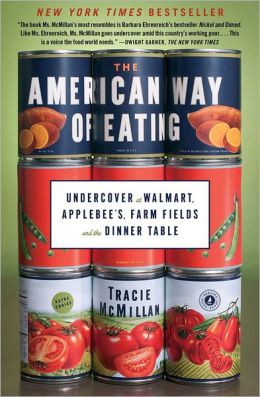
The American Way of Eating: Undercover at Walmart, Applebee's, Farm Fields and the Dinner Table by Tracie McMillan
Synopsis: The author takes a number of minimum wage or sub-minimum wage jobs within the food industry and tries to survive on limited funds as she investigates where our food originates.
Review: B This book reminded me a lot of Nickeled and Dimed, which I read in May. It is more recently written, and focuses more on food than the plight of the lower class, though in the end I felt like it had basically the same moral standpoint. It was easy to read and very interesting, but like I said before, pretty similar to a book I read a few weeks before, so I wasn't as interested in it as I probably would have been otherwise.
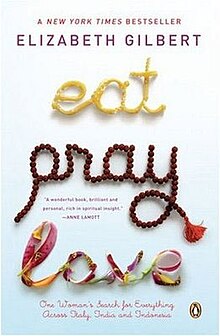
Eat, Pray, Love by Elizabeth Gilbert
Synopsis: After her marriage ends, a woman travels around the world in search of personal fulfillment and rebirth.
Review: C I can see why this book was so popular a few years ago, because it was super easy to read and very much appealing to the "chick-lit" portion of the population. I got kind of bored by it because to me the main character / author seemed to be pretty entitled, and I can imagine that some of the people would be offended by how their cultures were depicted from an outsider's perspective. Good beach reading though!
Thirteen Moons by Charles Frazier
Synopsis: A boy is sold into indentured servitude in the Indian-controlled lands in the post-Civil War era, and experiences a lot of amazing adventures as he aligns himself more and more with the Native Americans and less with his own racial group.
Review: A Though by the same author as Cold Mountain, one of my favorite books, I can see why this novel didn't garner as many accolades as his first. However, the story is really interesting once you get past the first three or four chapters, and, amazingly, it's closely based on a true story, which was quite interesting to research a bit after I finished the novel. At times it moves a bit slowly but I did enjoy it.
The Unbearable Lightness of Being by Milan Kundera
Synopsis: A story of a love quadrangle in World War II Europe (especially in what is now the Czech Republic and Austria)
Review: A I loved this book. I finally got around to reading it literally one year after a literary friend recommended it very highly. It, like many other great books, did take a few chapters to get into, but then I loved it. A quick warning, though: it was very explicit at moments, so some people might not appreciate it. Also, it uses quite a bit of poetic language - again something that many people dislike. However, if you have the same literary tastes as I do, read this book!
The Art of Possibility: Transforming Professional and Personal Life by Rosamund Stone Zander and Benjamin Zander
Synopsis: Positive thinking can transform the opportunities that present themselves to you
Review: B This book for me was not very interesting, but that's only because I know the author personally and have heard him give lectures on this topic at least four or five times, so I had heard many of the most interesting stories before. Additionally, I have worked with him, playing principal horn in his orchestra, for over two years, so I am quite familiar with his approach. I do like what he has to say, and have found it useful in my own life and playing, but for me the book was a bit redundant. However, I would recommend reading it, even if you're not a musician. It's more about finding opportunities in everyday life than anything specifically musical, and in fact it is co-authored by Ben Zander's wife, who was/is a psychologist, so she has a less specifically musical analysis of each problem or example.
The Tipping Point: How Little Things Can Make a Big Difference by Malcolm Gladwell
Review: C To be honest, I really don't remember this book at all, and that's why I have to give it a C. It made very little impression, neither positive or negative, but from what I do remember, I think it was quite similar to Outliers and Freakonomics, both of which I had read the month before.
The Guernsey Literary and Potato Peel Pie Society by Mary Ann Shaffer and Annie Barrows
Synopsis: Through letters, this book tells the story of what happened on the islands in the English Channel during World War II, through the eyes of a writer who investigates the goings on in the aftermath of the war.
Review: C This book got consistently good reviews everywhere I looked, but I really was not very interested by it. If I hadn't been bored out of my mind cat-sitting for friends, I probably would have stopped reading a third of the way through. Personally, I find books written through the point of view of letters to feel very contrived, and this was no different. The worst was when the main character meets up in person with some other characters and clearly the authors had to come up with some way for the story to continue. I felt that the characters weren't fully developed and I wasn't really invested in them or the plot much at all. But it is an easy read!
The American Way of Eating: Undercover at Walmart, Applebee's, Farm Fields and the Dinner Table by Tracie McMillan
Synopsis: The author takes a number of minimum wage or sub-minimum wage jobs within the food industry and tries to survive on limited funds as she investigates where our food originates.
Review: B This book reminded me a lot of Nickeled and Dimed, which I read in May. It is more recently written, and focuses more on food than the plight of the lower class, though in the end I felt like it had basically the same moral standpoint. It was easy to read and very interesting, but like I said before, pretty similar to a book I read a few weeks before, so I wasn't as interested in it as I probably would have been otherwise.
Eat, Pray, Love by Elizabeth Gilbert
Synopsis: After her marriage ends, a woman travels around the world in search of personal fulfillment and rebirth.
Review: C I can see why this book was so popular a few years ago, because it was super easy to read and very much appealing to the "chick-lit" portion of the population. I got kind of bored by it because to me the main character / author seemed to be pretty entitled, and I can imagine that some of the people would be offended by how their cultures were depicted from an outsider's perspective. Good beach reading though!
Thirteen Moons by Charles Frazier
Synopsis: A boy is sold into indentured servitude in the Indian-controlled lands in the post-Civil War era, and experiences a lot of amazing adventures as he aligns himself more and more with the Native Americans and less with his own racial group.
Review: A Though by the same author as Cold Mountain, one of my favorite books, I can see why this novel didn't garner as many accolades as his first. However, the story is really interesting once you get past the first three or four chapters, and, amazingly, it's closely based on a true story, which was quite interesting to research a bit after I finished the novel. At times it moves a bit slowly but I did enjoy it.
The Unbearable Lightness of Being by Milan Kundera
Synopsis: A story of a love quadrangle in World War II Europe (especially in what is now the Czech Republic and Austria)
Review: A I loved this book. I finally got around to reading it literally one year after a literary friend recommended it very highly. It, like many other great books, did take a few chapters to get into, but then I loved it. A quick warning, though: it was very explicit at moments, so some people might not appreciate it. Also, it uses quite a bit of poetic language - again something that many people dislike. However, if you have the same literary tastes as I do, read this book!
The Art of Possibility: Transforming Professional and Personal Life by Rosamund Stone Zander and Benjamin Zander
Synopsis: Positive thinking can transform the opportunities that present themselves to you
Review: B This book for me was not very interesting, but that's only because I know the author personally and have heard him give lectures on this topic at least four or five times, so I had heard many of the most interesting stories before. Additionally, I have worked with him, playing principal horn in his orchestra, for over two years, so I am quite familiar with his approach. I do like what he has to say, and have found it useful in my own life and playing, but for me the book was a bit redundant. However, I would recommend reading it, even if you're not a musician. It's more about finding opportunities in everyday life than anything specifically musical, and in fact it is co-authored by Ben Zander's wife, who was/is a psychologist, so she has a less specifically musical analysis of each problem or example.
Review: C To be honest, I really don't remember this book at all, and that's why I have to give it a C. It made very little impression, neither positive or negative, but from what I do remember, I think it was quite similar to Outliers and Freakonomics, both of which I had read the month before.
Friday, August 16, 2013
25 Things: Read Moby Dick
One of the things on my list of things to do before turning 25 was read Moby Dick. I felt that this is one of the classics that you always hear about, but actually not that many people have read cover to cover. As an avid reader and generally trying-to-be-educated person, I decided to add it to my list.
*Warning: spoilers ahead* (not that most people don't know what happens in this book anyways)
Altogether, I mostly enjoyed this book. The beginning was pretty interesting (though quite racist at moments) but then, like a long journey at sea, settled into a long monotony, with every few chapters something minor occurring, and in between these, long essays on topics such as the meaning of whiteness (since Moby Dick was a white whale), or classification of different types of whales. Finally, there was a ton of action in about the last three chapters. So, while I enjoyed the book, I felt like it would have been more interesting if it were shorter. However, I can imagine that this feeling is a product of my age and generation; in a day of instant access to so much information and entertainment, we have much less patience for a slow-moving story than Melville's original audience may have.
My favorite quote occurs early in the book, when Ishmael, the narrator, is describing the different types of whales, and says that, despite the monumental task of differentiating between whales, he is up to the task: "...I have swam through libraries and sailed through oceans..." I love this quote because it gives such a great image of reading and knowledge.
Anyways, despite the nice moments in this book, I am quite glad to be done reading it, and if I put another book on my list in the future, it will hopefully be one I find less tedious.
*Warning: spoilers ahead* (not that most people don't know what happens in this book anyways)
Altogether, I mostly enjoyed this book. The beginning was pretty interesting (though quite racist at moments) but then, like a long journey at sea, settled into a long monotony, with every few chapters something minor occurring, and in between these, long essays on topics such as the meaning of whiteness (since Moby Dick was a white whale), or classification of different types of whales. Finally, there was a ton of action in about the last three chapters. So, while I enjoyed the book, I felt like it would have been more interesting if it were shorter. However, I can imagine that this feeling is a product of my age and generation; in a day of instant access to so much information and entertainment, we have much less patience for a slow-moving story than Melville's original audience may have.
My favorite quote occurs early in the book, when Ishmael, the narrator, is describing the different types of whales, and says that, despite the monumental task of differentiating between whales, he is up to the task: "...I have swam through libraries and sailed through oceans..." I love this quote because it gives such a great image of reading and knowledge.
Anyways, despite the nice moments in this book, I am quite glad to be done reading it, and if I put another book on my list in the future, it will hopefully be one I find less tedious.
Tuesday, June 4, 2013
What I'm Reading - May 2013 Edition
May 2013 was a month of reading, what with lots of travels (to Boston, New York, and moving back to my parent's place in Virginia for the summer), and my current situation of cat-sitting for some friends and becoming extremely bored at their house since I already finished catching up on both "Game of Thrones" and the new season of "Arrested Development". So here are the books* I've read since the beginning of May, with a brief synopsis and my review, presented in the order that I completed reading them.
French Women Don't Get Fat: The Secret of Eating for Pleasure by Mireille Guiliano
Synopsis: This is a diet book, written by a woman who was raised in France, based on her own observations about the French lifestyle.
Review: F I felt like this should be renamed the pretentious-yet-common-sense diet book. Every suggestion she presents is so immediately evident, yet presented in an extremely superior and smug tone of voice, that it was infuriating. First of all,not all French women are skinny, and most of the concepts that she presented are certainly not exclusive to even Europeans as a whole - for example, her suggestion that you should take the stairs instead of the elevator if you want to lose weight. Duh. And her sense of superiority simply because she is French made me crazy. I only finished reading the whole book because I was working stage crew for an extremely long concert and this was the only reading material that I'd brought. I only read this book in the first place, by the way, because someone in my dorm was throwing it away and I figured, since it's a free book, why not? I wish I hadn't bothered.
Outliers: The Story of Success by Malcolm Gladwell
Synopsis: This book tries to explain the differences between people who are successful and those who are less so, based on such seemingly arbitrary and/or lucky criterion such as when and where they were born, or happening to go to a certain high school over another.
Review: A I really enjoyed this book. However, it kind of made me feel bad about things, because of a few points that he made. First, Malcolm Gladwell pointed out that some people succeed just based on when they were born, using the example of Bill Gates, who was born at just the right time to take advantage of the boom in the informational technology field. This makes me feel a bit hopeless about being a classical musician in the 21st century, when the peak of my field was in the late 18th and 19th centuries. The other point he makes regards the theory of 10,000 hours, which says that you only have a hope of becoming the top of your field in any field after 10,000 hours of practice. Yet, there are also so many people who do put in the mandatory time and effort, and still never make it. If I make a very conservative estimate, I reached the point of 10,000 hours spent on classical music somewhere around when I turned 23 (counting since I started playing cello at the age of 4 1/2), but I don't think I'm any closer to conventional success in my field than thousands of my peers, seeing as I don't have a job. On another note, I really appreciated Malcolm Gladwell's writing style, which made this book so interesting despite its material's potential for dryness. I finished it in just a few hours.
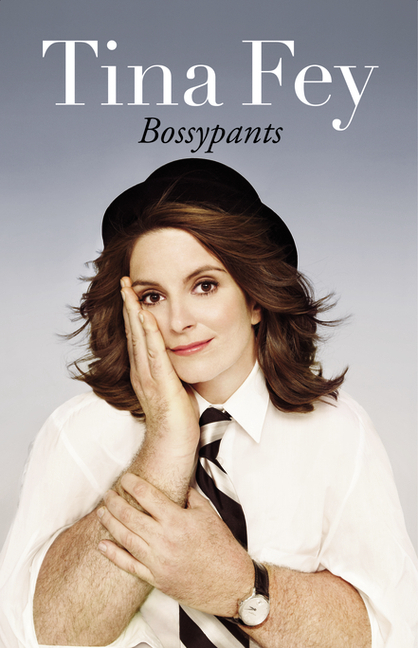
Synopsis: This is a memoir written by one of the most famous female comedians alive today.
Review: C I'm sorry to give this book such a mediocre review, since I fully expected to love it going in, based on how I feel about Tina Fey and her work on "30 Rock" and "Saturday Night Live". I was pretty disappointed, though. Despite a lot of interesting and amusing stories, much of the book to me came across as trying too hard to be funny. But I admit humor is a hard genre to transcribe, and I've heard that this book works better as an audio book, which I almost wish I'd gone with. Maybe I would have found the humor less forced that way.
How to be a Woman by Caitlin Moran
Synopsis: This feminist manifesto follows the life of the author through her discovery of her own sexuality and life choices both as an adolescent and into adulthood, and also introduces thoughts regarding today's feminism.
Review: A+ At first I thought this book would be a bit much for me, since in some of the early chapters she is quite explicit in her description of her sexual behaviors, but I grew to really appreciate her positive and empowering message, and by the end vowing to buy this book for a number of young women that I know. A few things really popped out at me: her definition of a feminist, and her brutally honest description of having an abortion. This is a book I think all women should read at least once and have in their libraries, but you should probably know that I already considered myself a feminist before reading this, so maybe not everyone would agree with my evaluation of this book.
Nickel and Dimed: On (Not) Getting By in America by Barbara Ehrenreich
Synopsis: An upper middle-class journalist/writer goes "undercover" working a variety of minimum wage jobs and living only on the money she earns there, in order to explore the living conditions of people at the poverty level. Her jobs include working as a waitress, cleaning houses, and working at Wal-Mart.
Review: B I feel bad saying I enjoyed this book, since I don't think the word "enjoy" has any place in this somewhat sobering subject matter. It was very amazing the obstacles the author encountered when doing what many people would consider unskilled labor. As a highly educated woman (she has a Ph.D.), she got rejected from many places of work she applied to, such as grocery stores and chain fast-food restaurants. I'm already quite liberal, but this gave me a different perspective on minimum wage workers, since one so rarely sees reporting that isn't from an outsider's perspective. The unfortunate thing about this book is that it was written almost fifteen years ago and I imagine many of the situations she references would be quite different today. I would be quite interested to see if anyone else has conducted a similar experiment more recently, and which of the difficulties they experienced were the same or different, and in what ways.
Check back tomorrow for another update to the blog, and next month for another issue of What I'm Reading.
Until next time!
Lauren
*During this month, I also finished reading Moby Dick (finally!), but since that is one of the things on my list of 25 things to do before I turn 25, its review will come in a separate blog entry.
French Women Don't Get Fat: The Secret of Eating for Pleasure by Mireille Guiliano
Synopsis: This is a diet book, written by a woman who was raised in France, based on her own observations about the French lifestyle.
Review: F I felt like this should be renamed the pretentious-yet-common-sense diet book. Every suggestion she presents is so immediately evident, yet presented in an extremely superior and smug tone of voice, that it was infuriating. First of all,not all French women are skinny, and most of the concepts that she presented are certainly not exclusive to even Europeans as a whole - for example, her suggestion that you should take the stairs instead of the elevator if you want to lose weight. Duh. And her sense of superiority simply because she is French made me crazy. I only finished reading the whole book because I was working stage crew for an extremely long concert and this was the only reading material that I'd brought. I only read this book in the first place, by the way, because someone in my dorm was throwing it away and I figured, since it's a free book, why not? I wish I hadn't bothered.
Outliers: The Story of Success by Malcolm Gladwell
Synopsis: This book tries to explain the differences between people who are successful and those who are less so, based on such seemingly arbitrary and/or lucky criterion such as when and where they were born, or happening to go to a certain high school over another.
Review: A I really enjoyed this book. However, it kind of made me feel bad about things, because of a few points that he made. First, Malcolm Gladwell pointed out that some people succeed just based on when they were born, using the example of Bill Gates, who was born at just the right time to take advantage of the boom in the informational technology field. This makes me feel a bit hopeless about being a classical musician in the 21st century, when the peak of my field was in the late 18th and 19th centuries. The other point he makes regards the theory of 10,000 hours, which says that you only have a hope of becoming the top of your field in any field after 10,000 hours of practice. Yet, there are also so many people who do put in the mandatory time and effort, and still never make it. If I make a very conservative estimate, I reached the point of 10,000 hours spent on classical music somewhere around when I turned 23 (counting since I started playing cello at the age of 4 1/2), but I don't think I'm any closer to conventional success in my field than thousands of my peers, seeing as I don't have a job. On another note, I really appreciated Malcolm Gladwell's writing style, which made this book so interesting despite its material's potential for dryness. I finished it in just a few hours.
The Help by Kathryn Stockett
Synopsis: A young white girl returns home from college with different views on race than the rest of her friends in a small Mississippi town.
Review: A I'd been wanting to read this book since I saw the movie a couple years ago, but I never got around to it until this month. I literally couldn't put this book down, and was reading it as I walked down the streets of New Haven, no joke. Even though I knew what was going to happen because of seeing the film version, I was glued to the page! I know this book and the movie got a lot of criticism for some of its treatment of racial issues, but I don't feel qualified to speak to that. I would, however, highly recommend this book based on its merit as a novel, and I found the movie definitely enjoyable as well.
Freakonomics: A Rogue Economist Explores the Hidden Side of Everything by Steven D. Levitt and Stephen J. Dubner
Synopsis: The subtitle pretty much explains what this book is about, but more or less, Levitt analyzes data such as demographic data collected state by state to explain, in one example, why some teachers cheat on standardized testing and how to catch them, or in another example, whether the name you give your child will affect their opportunities later in life.
Review: B Perhaps because I was already statistically-analysis-ed out from reading Outliers so recently, but I found this book to be almost the same in many ways. Sure, these authors weren't exclusively looking at indicators of success, but the writing style and content was so similar that I almost felt I was reading the same book over again. However, they did find some interesting conclusions. I hadn't realized how indicative my name is of my ethnicity, for example, until I saw it right at the top of the chart of most popular baby names for white girls in my birth year. I also found it very interesting to see the average number of years of education of the mother for each popular baby name. The average mother of a baby named Jesus had only something like 8 1/2 years of schooling (which means they must either have been in the seventh grade at the time of the child's birth, or have dropped out of school at a young age), while the mother of baby Finn's have nearly 15 years of education, on average (meaning a full K-12 experience plus a couple years of college). My name wasn't listed with an average number of years of education, but I wonder what it would have been. I found all of this quite interesting, but I definitely wouldn't recommend reading this book at the same time as Outliers to avoid the statistical burn-out I experienced.
Bossypants by Tina FeySynopsis: A young white girl returns home from college with different views on race than the rest of her friends in a small Mississippi town.
Review: A I'd been wanting to read this book since I saw the movie a couple years ago, but I never got around to it until this month. I literally couldn't put this book down, and was reading it as I walked down the streets of New Haven, no joke. Even though I knew what was going to happen because of seeing the film version, I was glued to the page! I know this book and the movie got a lot of criticism for some of its treatment of racial issues, but I don't feel qualified to speak to that. I would, however, highly recommend this book based on its merit as a novel, and I found the movie definitely enjoyable as well.
Freakonomics: A Rogue Economist Explores the Hidden Side of Everything by Steven D. Levitt and Stephen J. Dubner
Synopsis: The subtitle pretty much explains what this book is about, but more or less, Levitt analyzes data such as demographic data collected state by state to explain, in one example, why some teachers cheat on standardized testing and how to catch them, or in another example, whether the name you give your child will affect their opportunities later in life.
Review: B Perhaps because I was already statistically-analysis-ed out from reading Outliers so recently, but I found this book to be almost the same in many ways. Sure, these authors weren't exclusively looking at indicators of success, but the writing style and content was so similar that I almost felt I was reading the same book over again. However, they did find some interesting conclusions. I hadn't realized how indicative my name is of my ethnicity, for example, until I saw it right at the top of the chart of most popular baby names for white girls in my birth year. I also found it very interesting to see the average number of years of education of the mother for each popular baby name. The average mother of a baby named Jesus had only something like 8 1/2 years of schooling (which means they must either have been in the seventh grade at the time of the child's birth, or have dropped out of school at a young age), while the mother of baby Finn's have nearly 15 years of education, on average (meaning a full K-12 experience plus a couple years of college). My name wasn't listed with an average number of years of education, but I wonder what it would have been. I found all of this quite interesting, but I definitely wouldn't recommend reading this book at the same time as Outliers to avoid the statistical burn-out I experienced.
Synopsis: This is a memoir written by one of the most famous female comedians alive today.
Review: C I'm sorry to give this book such a mediocre review, since I fully expected to love it going in, based on how I feel about Tina Fey and her work on "30 Rock" and "Saturday Night Live". I was pretty disappointed, though. Despite a lot of interesting and amusing stories, much of the book to me came across as trying too hard to be funny. But I admit humor is a hard genre to transcribe, and I've heard that this book works better as an audio book, which I almost wish I'd gone with. Maybe I would have found the humor less forced that way.
How to be a Woman by Caitlin Moran
Synopsis: This feminist manifesto follows the life of the author through her discovery of her own sexuality and life choices both as an adolescent and into adulthood, and also introduces thoughts regarding today's feminism.
Review: A+ At first I thought this book would be a bit much for me, since in some of the early chapters she is quite explicit in her description of her sexual behaviors, but I grew to really appreciate her positive and empowering message, and by the end vowing to buy this book for a number of young women that I know. A few things really popped out at me: her definition of a feminist, and her brutally honest description of having an abortion. This is a book I think all women should read at least once and have in their libraries, but you should probably know that I already considered myself a feminist before reading this, so maybe not everyone would agree with my evaluation of this book.
Nickel and Dimed: On (Not) Getting By in America by Barbara Ehrenreich
Synopsis: An upper middle-class journalist/writer goes "undercover" working a variety of minimum wage jobs and living only on the money she earns there, in order to explore the living conditions of people at the poverty level. Her jobs include working as a waitress, cleaning houses, and working at Wal-Mart.
Review: B I feel bad saying I enjoyed this book, since I don't think the word "enjoy" has any place in this somewhat sobering subject matter. It was very amazing the obstacles the author encountered when doing what many people would consider unskilled labor. As a highly educated woman (she has a Ph.D.), she got rejected from many places of work she applied to, such as grocery stores and chain fast-food restaurants. I'm already quite liberal, but this gave me a different perspective on minimum wage workers, since one so rarely sees reporting that isn't from an outsider's perspective. The unfortunate thing about this book is that it was written almost fifteen years ago and I imagine many of the situations she references would be quite different today. I would be quite interested to see if anyone else has conducted a similar experiment more recently, and which of the difficulties they experienced were the same or different, and in what ways.
Check back tomorrow for another update to the blog, and next month for another issue of What I'm Reading.
Until next time!
Lauren
*During this month, I also finished reading Moby Dick (finally!), but since that is one of the things on my list of 25 things to do before I turn 25, its review will come in a separate blog entry.
Subscribe to:
Posts (Atom)